Abramo Ardizzi
The Merchant, The Diplomat, The Count. (15th Century)
In the turbulent Lombardy of the 15th century, where power swung violently between feudal lords and new dynasties, the figure of Abramo Ardizzi (or de Ardiciis) stands as the archetype of the Renaissance man: capable of mastering both commerce and high diplomacy.
Son of Antonio Pozzo Ardizzi, Abramo not only inherited an ancient surname from the Gens Putea, but was the architect of its definitive elevation. Through his ingenuity and loyalty, he transformed a family of local notables into counts of the Kingdom and counselors to dukes.
I. Economic Power
Before sitting at the table of kings, Abramo built his empire on the most valuable resource of Vigevano: wool. In the 15th century, the city was a hub of industry and Abramo was not a mere spectator; he was the protagonist.
Local sources identify him as the "Lord of the Contrada di Valle", the district outside the walls where mills and workshops were concentrated. As a "woolen cloth merchant", he controlled production that was exported throughout Europe, amassing the fortune necessary to finance wars and build churches.
💧 The Master of Water
To power the wool mills and irrigate the fields, water was needed. The manuscript of his descendant, Simone del Pozzo (1550), reveals that the family managed the "Roggia Comune", the vital canal of the Ticino Valley, with rights dating back to the year 1400. Controlling water meant controlling the economic life of the city.
📜 View Documentary Source (1550 Manuscript)
"...Roggia Comune in la Valle del Ticino... Si no l'anno 1400 per pro ... de fiorini trenta..."
"...[The] Common Roggia [Canal] in the Ticino Valley... If not [since] the year 1400 for pro [benefit/income]... of thirty florins..."
II. At the Visconti Court (1439-1447)
His wealth and local prestige opened the doors of Milan for him. In July 1439, records mention him for the first time with the title of "familiare" of Duke Filippo Maria Visconti. This was no minor office; it meant he was part of the sovereign's inner and trusted circle, the "familiares equitantes" (knights of the family).
His loyalty had deep roots: the Ardizzi were historically Ghibellines (supporters of the Emperor and the Duke), a political stance that in the past had cost them exile from Vigevano during the Guelph uprisings. Abramo was restoring the honor of his house.
In June 1447, faced with political instability, the Duke entrusted him with a critical mission: he was sent as ambassador to the King of France (Charles VII). His objective was to negotiate a defensive league to protect the Duchy, demonstrating his skill in high international politics.
📜 July 1439: The Title of "Familiare"
"Compare la prima volta nel luglio 1439 in qualità di 'familiare' di Filippo M. Visconti... In un elenco del personale della corte ducale del 10 nov. 1444 l'A. figura tra i 'familiares equitantes'."
"He appears for the first time in July 1439 as a 'familiare' [intimate/family servant] of Filippo M. Visconti... In a list of the ducal court staff of November 10, 1444, Abramo appears among the 'familiares equitantes' [knights of the family]."
III. The Siege and Salvation of Vigevano (1449)
The death of the last Visconti in 1447 unleashed chaos. The "Ambrosian Republic" was proclaimed, and Vigevano was left isolated. In May 1449, the formidable condottiero Francesco Sforza laid siege to the city. The resistance was fierce: legend has it that the people of Vigevano, desperate, used sacks of wool (the flagship product of merchants like Abramo) to cushion the impact of the artillery.
📜 January 4, 1449: Sforza Commissioner
"...già in rapporti con Francesco Sforza, che il 4 genn. 1449 lo nominò suo commissario a ricevere il giuramento di fedeltà..."
"...already in relations with Francesco Sforza, who on January 4, 1449 appointed him as his commissioner to receive the oath of allegiance..."
🕊️ Diplomacy as a Shield
When the walls were failing, Abramo Ardizzi assumed historical responsibility and played a dual role: defender of his city and liaison with the future Duke. With a "broad mandate from the General Council," he went out to meet Sforza. He did not go to surrender, but to negotiate the final terms, as recounted by historian P.G. Biffignandi (1810). On June 6, 1449, he succeeded in signing the "Capitoli della resa di Vigevano" (Chapters of the Surrender).
This document saved Vigevano from looting and destruction, guaranteeing its ancient privileges under the new lord. Abramo not only protected his heritage; he saved the lives of his fellow citizens.
IV. The Duke's Right Hand (1450-1460)
With Francesco Sforza becoming Duke, Abramo's career took off. He became the indispensable man for difficult missions. The archives of the Sforza Chancellery preserve letters where the Duke calls him "cancellarius noster dilectus" (our beloved chancellor).
The Bridge Builder
As Governor of Alessandria, a key military stronghold, he not only maintained order. The 1550 manuscript relates that he built the bridge over the Tanaro river, carving his coat of arms on a pillar as a testament to his public administration.
Civil Authority
In 1455, he returned to his hometown covered in glory to serve as Consul and Podestà of Vigevano, the highest judicial and executive authority, completing the circle of his public service.
📜 View Ducal Letter (1452)
"Abraam de Arditiis de Viglevano, cancellarius noster dilectus..."
"Abramo Ardizzi of Vigevano, our most beloved chancellor..."
⚔️ 1454: The "Rocchetta" Incident
New documents reveal the harder side of his power. In 1454, Abramo had a bitter legal dispute ("vertenza") against Giovanni Codesi over economic matters.
Far from being a passive conflict, Abramo used his political influence to mobilize the Podestà. The result was the imprisonment of his rival in the "Rocchetta sul Tanaro", a fortress under military jurisdiction.
Source: Belloni, C. "Prime indagini sulle relazioni...". In: Vigevano e i territori circostanti... p. 120.
V. The Title of Count and Royal Friendship (1453)
The pinnacle of his life came in 1453. Sent again to France, Abramo forged a personal friendship with King René of Anjou (titular King of Naples). It was not a formal relationship; the chronicles speak of a "great acquaintance" (intimacy) between them.
In gratitude for his diplomatic services in the war against Venice, King René granted him an honor reserved for few: the fiefdom of Colonnella (in the Abruzzo) and the title of COUNT.
The Heraldic Privilege: Along with the title, he received the right to modify his coat of arms. The Ardizzi incorporated the Golden Lilies (Fleur-de-lis) on a blue field, symbol of the Royal House of France, an emblem that his descendants would proudly bear for centuries.
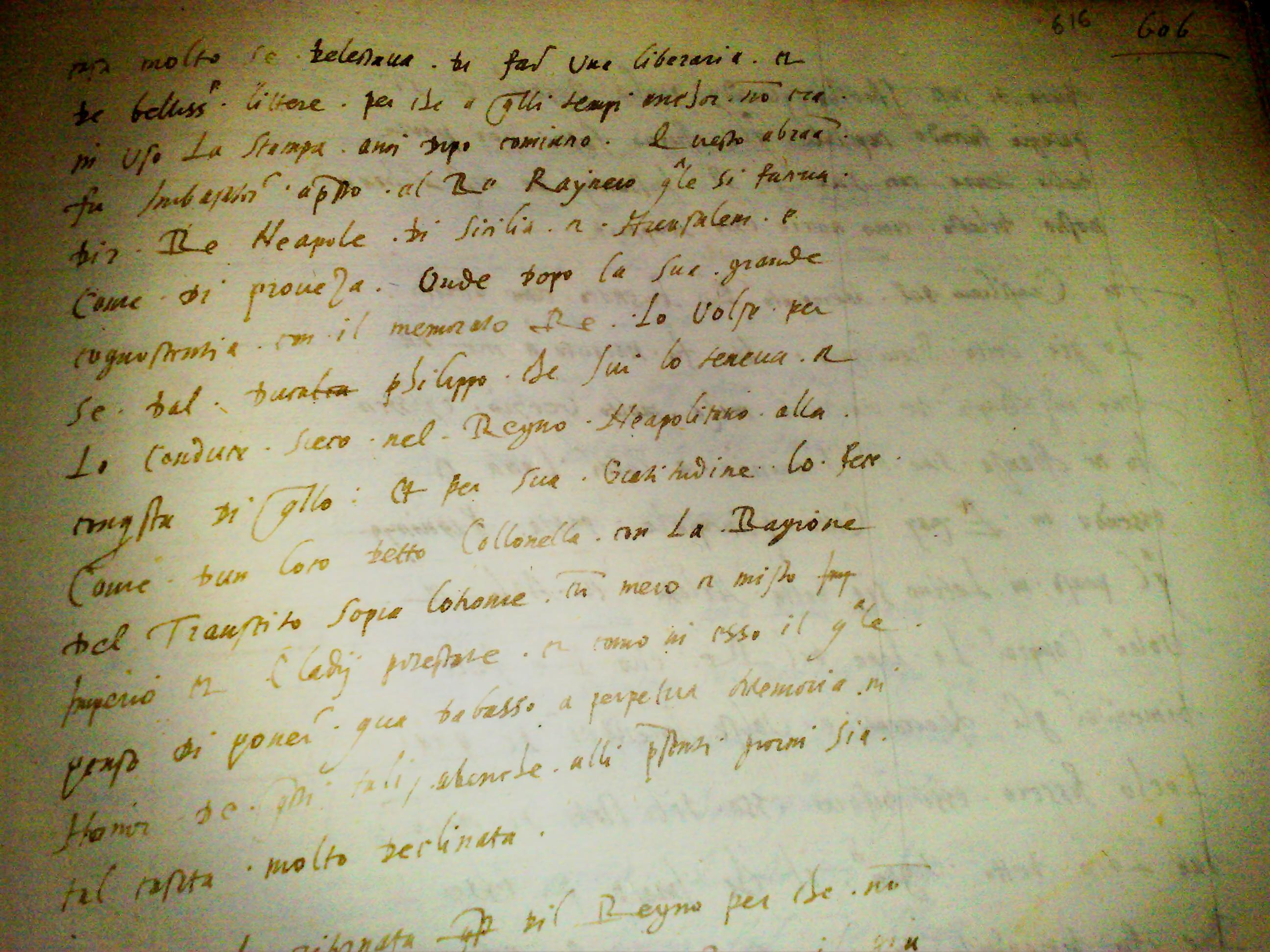
📜 View Royal Diploma
"...Et per sua Gratitudine lo fece Conte dun Loro detto Collonella... per se, e suoi discendenti Legitimi dell'uno e l'altro sesso."
"...And in his Gratitude he made him Count of a Place called Colonnella... for himself, and his legitimate descendants of both sexes."
VI. The Ecclesiastical Myth: Bishop or Diplomat?
For centuries, Abramo Ardizzi was attributed the rank of "Cardinal and Bishop of Senigallia." Rigorous analysis of ecclesiastical sources demands a formal correction of this data.
❌ The Origin of the Error (1669)
Carlo Stefano Brambilla, in La Chiesa di Vigevano, transcribed an inscription (now lost) found in the temple: "ABRAAM ARDICIVS EPISCOPVS SENOGALLIAE...". This "lying stone" or misinterpreted stone was the sole source of the myth.
✅ The Negative Proof
Upon consulting the official Cronotassi dei Vescovi (Succession of Bishops) of the Diocese of Senigallia, and reference works such as Italia Sacra (Ughelli), the name of Abramo Ardizzi does not appear in the list of 15th-century prelates.
Curatorial Conclusion: Abramo Ardizzi was not a clergyman. His power was civil and diplomatic (Count, Ambassador, Governor). The confusion may have arisen from a misreading of his titles as "Count Palatine" or from a glorifying posthumous attribution on the tombstone (centuries after his death).
Epilogue: The "Gold of Toulouse"
Abramo Ardizzi probably died around 1480. He left a tangible spiritual legacy: the foundation of the Church of St. Jerome and St. Mary Magdalene, which he endowed with sacred relics. However, worldly glory was ephemeral. His descendant Simone del Pozzo, writing in 1550, laments that the immense family fortune dissipated quickly after his death. With poetic bitterness, he compared this loss to the curse of the "Gold of Toulouse", thus marking the end of the golden era of the Ardizzi in great European politics.
Sources and Key References
- Partner, Peter. The Pope's Men: The Papal Civil Service in the Renaissance. Oxford: Clarendon Press, 1990.
- Prodi, Paolo. The Papal Prince. Cambridge: Cambridge University Press, 1987.
- Records of the Apostolic Chancery. Vatican Secret Archives.